Documentation Index

Fetch the complete documentation index at: https://help.gowindmill.com/llms.txt

Use this file to discover all available pages before exploring further.

Benefits of Connecting Slack to Windmill

Slack is where most day-to-day work happens — decisions, questions, collaboration, problem-solving.
Connecting Slack to Windmill allows that context to be remembered and used to support performance conversations without requiring anyone to write summaries or “manage up.”
  • Captures work as it happens — not at review time
  • Ensures employees get credit for contributions that are usually invisible
  • Helps managers remember accomplishments and follow-through across the year
  • Reduces time spent preparing for reviews, calibrations, and promotions
  • Makes feedback and evaluation more fair, grounded, and accurate
Windmill transforms ongoing Slack collaboration into structured insight for 1:1s, coaching, and performance reviews. In addition, Slack is where your team interacts with Windy, Windmill’s AI assistant. Connecting Slack is essential to using Windmill.

Setup

As part of onboarding, you’ll connect Slack to Windmill (our Slack app’s name is Windy). This is the foundation of all Windy communication. However, upon connecting Slack, Windy won’t automatically join any channels or read any messages. You need to add Windy to channels to experience the full power of the integration.

Adding Windy to channels

We recommend having Windmill “Autojoin all public channels” for new users. This gives Windy the most context about team collaboration. To enable autojoin:
  1. Go to Settings in Windmill
  2. Select Integrations
  3. Select Slack
  4. Go to Settings and select Autojoin all public channels
To add Windy to specific channels: There are two ways to add Windy to individual channels or private channels: Option 1: Using /invite in Slack
  1. In the Slack channel you want Windy to join, type /invite
  2. Select Add apps to this channel
  3. Search for Windy and add the app
Option 2: Through the Members list
  1. Navigate to the channel and click the channel name at the top
  2. Click the Integrations tab
  3. Click Add apps
  4. Search for Windmill and add the app

What happens when Windy joins a channel?

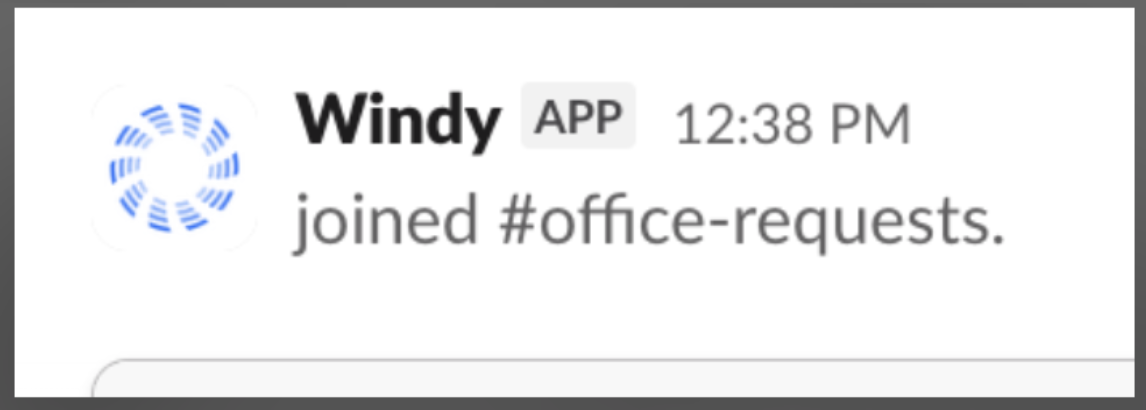
When you add Windy to a Slack channel, Windy does NOT send a notification to channel members. This means people won’t get pinged or notified when Windy is added. However, a message will appear in the channel that says “Windy joined #channel-name”. This message is visible to anyone viewing the channel, but it doesn’t trigger notifications, mentions, or alerts to channel members. Once Windy has joined a channel, Windmill can sync messages and Slack canvases from that channel. Example of Windy join message in Slack channel
No notifications are sent when Windy joins a channel. Members will only see a message in the channel history if they’re actively viewing it.

Message access and privacy

Windmill mirrors Slack’s permissions. You can only see messages in Windmill that you can already see in Slack.
  • Public channels: If Windy is in a public channel, anyone on your team who can see that channel in Slack can see its messages in Windmill.
  • Private channels: Even when Windy is added to a private channel, only the human members of that private channel can see its raw messages in Windmill. Adding Windy never exposes private channel content to people outside the channel — including managers, admins, or anyone else who isn’t a member.
  • DMs and group DMs: Windy is never added to DMs through the standard integration, so DM content is never read or stored.
Adding Windy to a private channel does not make that channel’s messages visible to people who aren’t already members. Private stays private. Windmill enforces the same membership rules Slack does.
For workspace-wide engagement signals that don’t involve message content, see Slack Business Analytics — it pulls aggregate activity counts only (never message content, channel names, or DM participants).

Slack Canvas syncing

Slack Canvas syncing lets Windy use the planning docs, project briefs, and decision logs your team keeps in Slack as context for 1:1s, coaching, and performance reviews. Once Slack is connected and Windy has been added to a channel, Windmill automatically syncs canvases from that channel.

What gets synced

Windmill syncs Slack canvases as documents. This includes the canvas title, author, last updated time, and source link. When Windy needs to reference a canvas, Windmill fetches the readable text content from Slack and caches it for performance. Windy can use this context when a canvas is relevant to a summary, recommendation, feedback prompt, or performance conversation.

Access and privacy

Canvas syncing follows the same access model as Slack messages:
  • Windmill only syncs canvases from channels where Windy has been added
  • Private channel canvases are only available if Windy has been invited to that private channel, and they remain visible only to human members of that private channel in Windmill
  • Windmill uses Slack channel membership to control who can see synced canvas context
  • Canvases from channels where Windy isn’t present are not synced

Enabling Canvas syncing

New Slack installations include Canvas access automatically. If your company connected Slack before Canvas syncing was available, a Windmill admin may need to re-authenticate Slack so Slack can grant the updated permissions.
1

Go to Settings > Integrations

Navigate to the Integrations page in Windmill.
2

Open Slack

Click Slack in the list of integrations.
3

Re-authenticate Slack

Click Re-authenticate and approve the updated Slack permissions. After re-authentication, Windmill will begin syncing canvases from channels where Windy has been added.
Slack may show a permission for reading canvases during authorization. This permission is required for Canvas syncing.

Slack shortcuts

Slack shortcuts let you quickly send information to Windmill without leaving Slack. You can create shoutouts, add private notes, and add items to your 1:1 agendas—all directly from Slack.

Available shortcuts

ShortcutWhat it does
Create a shoutoutPublicly recognize a teammate for their work
Create a private noteSave a personal note about an employee (only visible to you)
Add to 1:1 agendaAdd a discussion topic to an upcoming 1:1 meeting

How to use shortcuts

There are three ways to access Slack shortcuts: This is the fastest way to capture context from a conversation.
1

Right-click on any Slack message

Hover over the message and click the three dots () menu, or right-click the message directly.
2

Select a shortcut

Choose Create a shoutout, Create a private note, or Add to 1:1 agenda from the menu.
3

Review and submit

A modal opens with the message text pre-filled. Edit the content if needed, select the relevant employees, and submit.
When you use a shortcut from a message, Windmill automatically pre-fills the content and suggests relevant employees based on the conversation.
Use the global search bar when you want to create something from scratch.
1

Open the global search bar

Press Cmd+K (Mac) or Ctrl+K (Windows) to open Slack’s global search bar.
2

Search for a shortcut

Type “shoutout”, “private note”, or “1:1 agenda” to find the shortcut you need, then select it.
3

Fill out the form

Enter your content and select the relevant employees.

Using slash commands

Type these commands directly in Slack:
CommandWhat it does
/shoutoutCreate a shoutout
/private-noteCreate a private note
/1-1-agendaAdd an item to a 1:1 agenda
You can also include your message directly after the command. For example: /shoutout Shoutout to Mark for leading the product launch!

Create a shoutout

Shoutouts let you publicly recognize teammates for their contributions. When you create a shoutout from Slack, it’s saved in Windmill and visible to others.
An admin must enable shoutouts for your company and configure a shoutouts channel in Slack before you can use this shortcut. See Shoutouts for setup instructions.
1

Trigger the shortcut

Right-click a message and select Create a shoutout, or use the /shoutout command.
2

Write your shoutout

Add or edit the recognition message. Be specific about what the person did well.
3

Select employees

Choose the teammates you want to recognize. You can select multiple people.
4

Click Send

Your shoutout is saved and shared in Windmill.

Create a private note

Private notes are personal records about employees—only you can see them. They’re useful for tracking observations, feedback, or context you want to remember for reviews or 1:1s.
1

Trigger the shortcut

Right-click a message and select Create a private note, or use the /private-note command.
2

Write your note

The message content is pre-filled as a quote. Add any additional context.
3

Select employees

Choose who this note is about. You can select multiple employees, including yourself.
4

Click Save

Your note is saved privately in Windmill.
Private notes are only visible to you. The employees you tag won’t be notified or see the note.

Add to 1:1 agenda

Capture discussion topics as they come up and add them directly to your upcoming 1:1 meetings.
1

Trigger the shortcut

Right-click a message and select Add to 1:1 agenda, or use the /1-1-agenda command.
2

Write the agenda item

Edit or add context to the topic you want to discuss.
3

Select employees

Choose which 1:1 partners should receive this agenda item. Only employees with upcoming 1:1 meetings with you will appear.
4

Click Add

The item is added to your 1:1 agenda page with a link back to the original Slack message.
You can only add agenda items for employees you have a scheduled 1:1 with. If someone doesn’t appear in the list, check that you have an upcoming 1:1 meeting with them.

Enabling shortcuts

Slack shortcuts require additional permissions. If you don’t see the shortcuts in your Slack workspace, an admin needs to re-authenticate the Slack integration.
1

Go to Settings > Integrations

Navigate to the Integrations page in Windmill.
2

Find the Slack integration

Click on Slack in the list of integrations.
3

Re-authenticate

Click Re-authenticate to grant the additional permissions needed for shortcuts.

Permissions

You need the ability to connect Slack to third-party applications and install Slack apps.

FAQs

No, Windy does not send notifications when added to a channel.When you add Windy to a Slack channel, channel members will NOT receive any notifications, pings, or alerts.A message will appear in the channel that says “Windy has joined this channel”, but this is just a visible message in the channel history — it doesn’t trigger any notifications to channel members. People will only see this message if they’re actively viewing the channel.
In Slack, type /remove @Windy in the channel you want to remove Windy from.Admins can also remove Windy through the Windmill dashboard:
  1. Go to Settings > Integrations > Slack
  2. Click Settings
  3. Find the channel you want to remove Windy from
  4. Click the three dots and select Leave channel
No. Windmill mirrors Slack’s permissions exactly. Raw messages from a private channel are never visible to anyone who isn’t a member of that channel — even if Windy has been added to it.Adding Windy to a private channel does not change who can see the content. If you can’t read the channel in Slack, you can’t read it in Windmill.The only Slack data Windmill ever exposes outside of channel membership is aggregate activity counts from Slack Business Analytics (e.g., “Alex sent 42 messages on Monday”) — never message content, channel names, or DM participants.
Slack Business Analytics is only for Slack Business+ and Enterprise Grid plans. This connection provides additional stats about your company’s Slack usage but doesn’t give Windmill access to messages or channels.Slack (the standard connection) works with any Slack plan. This connection doesn’t give Windmill access to messages until you add the Slack app to specific channels.
Windmill stores the following data:
  • Messages (both in threads and outside of threads)
  • Slack canvases in channels where Windy has been added
  • Users
  • Channels
Windmill only has access to channels where the bot has been added to the channel. We don’t currently store reactions. Our Slack scopes may permit additional content in the future, but Windmill only syncs the data listed above today.
Windy can only sync canvases from channels where Windy has been added. First, confirm Windy is in the channel that contains the canvas. If your company connected Slack before Canvas syncing was available, ask a Windmill admin to re-authenticate the Slack integration.If the canvas was created or updated recently, wait for the next sync. Most integration activity appears in Windmill within one to two hours.